




FAQ
Frequently asked questions about Miniature Bull Terriers
Click on a question to see the answer. If something is missing, leave a request below.
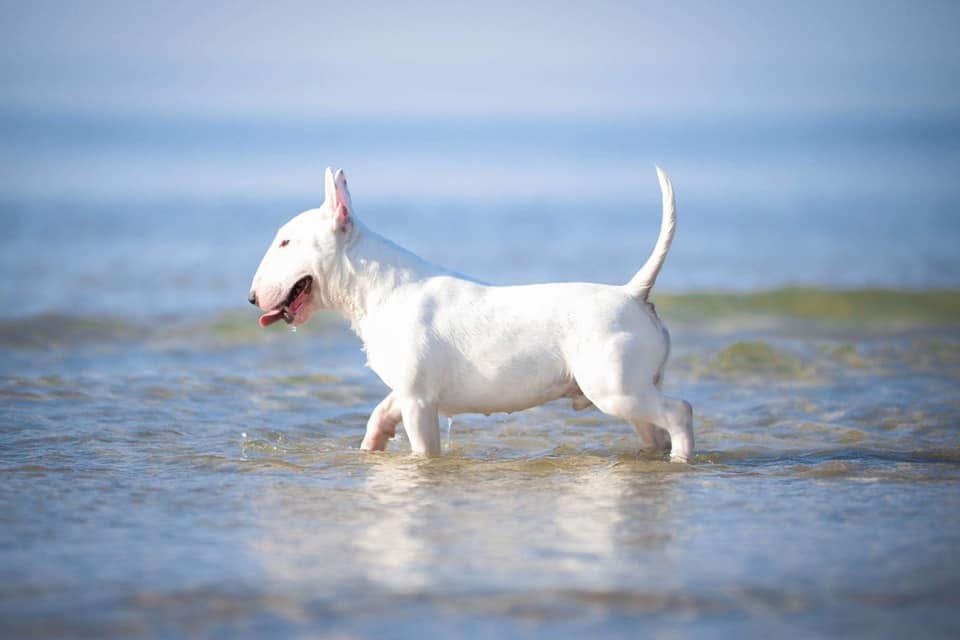
Active companionEasy groomingLoves play-based training
Tip
Did not find your answer? Leave a request below — we will help with choosing a puppy, logistics and preparation for the new home.
First week
Short checklist for new owners
Routine and place
Prepare a quiet corner with a bed; set fixed times for feeding and walks.
Introducing the family
Introduce gradually; avoid overwhelming the puppy with events in the first days.
Hygiene
Puppy pad/toilet routine; food and water bowls in a stable, accessible place.
Play and training
3–5 short play or training sessions of 5–10 minutes daily, only positive methods.
Documents you receive
- •Pet passport and vaccination schedule
- •Microchip
- •Feeding and care recommendations
- •24/7 support contacts
Myths and facts
About Miniature Bull Terriers
Myth: Mini bulls are aggressive.
Fact: With proper upbringing they are friendly, social companions.
Myth: They are hard to groom.
Fact: Short coat and basic care are enough to keep them in great shape.
Myth: They are not suitable for apartments.
Fact: They adapt well with daily exercise and close contact with people.
Test glossary
Common abbreviations explained
GENETIC HEALTH TESTING
Below are DNA tests (e.g. Laboklin) used to assess hereditary risks.
PLL — Primary Lens Luxation
Primary lens luxation (eyes). Knowing carrier status helps avoid risky combinations.
LAD — Lethal Acrodermatitis
A genetic defect affecting skin and immune system; carriers are excluded from breeding.
LP — Laryngeal Paralysis
Laryngeal paralysis. Testing helps minimise the risk in offspring.
CLINICAL HEALTH CHECKS
BAER — Brainstem Auditory Evoked Response
Hearing test using brainstem evoked potentials. Recommended for breeds prone to deafness.
HEART
Cardiac examination (auscultation / ECG / echo as needed). Controls heart defects and function.
KIDNEY HEALTH
Evaluation of kidneys via blood biochemistry, urinalysis and ultrasound when indicated.
ADDITIONAL CLINICAL TESTS
Patella Luxation
Grading of kneecap luxation (0–4). Important orthopaedic screening for breeding dogs.
Send a request
Have questions or want to check puppy availability? Fill in the form — we are in touch.